
About Stephanie Benedetto
Can you tell us a bit about your journey and what led you to focus on deadstock and circular solutions in the fashion industry?
My family has worked in textiles and fashion for over 100 years! In 1896, my great-grandfather came from Austria to New York with nothing. He found old fabrics and furs that people didn’t need and turned them into beautiful clothes by hand. He didn’t call it “sustainable,” but he reused materials to earn money. I grew up hearing his stories, and they still inspire how we do business today.
How did the concept for Aloqia emerge, and what differentiates it in the sustainability space today?
The concept for Aloqia emerged from our firsthand look at how much valuable inventory was sitting idle or going to waste across global supply chains, especially in fashion, CPG, and hospitality. We realized that excess wasn’t just a threat to business profitability, but an overlooked asset class! Aloqia was built as the global infrastructure to turn hidden inventory inefficiencies into value, fast.
We’re not just promoting resale and reuse. We’re simulating it via digit twins and operationalizing it! Our platform makes it easy for companies to identify, move, and monetize excess materials across their supply chains. And results speak: up to 60% more value recovered, 83% faster decisions, and 92% of waste kept out of landfills. Big brands from Ralph Lauren, Victoria’s Secret, and SHEIN to Anheuser-Busch are already using it.
Understanding Deadstock
Let’s start with the basics—how do you define 'deadstock' and what kinds of materials typically fall under that category?
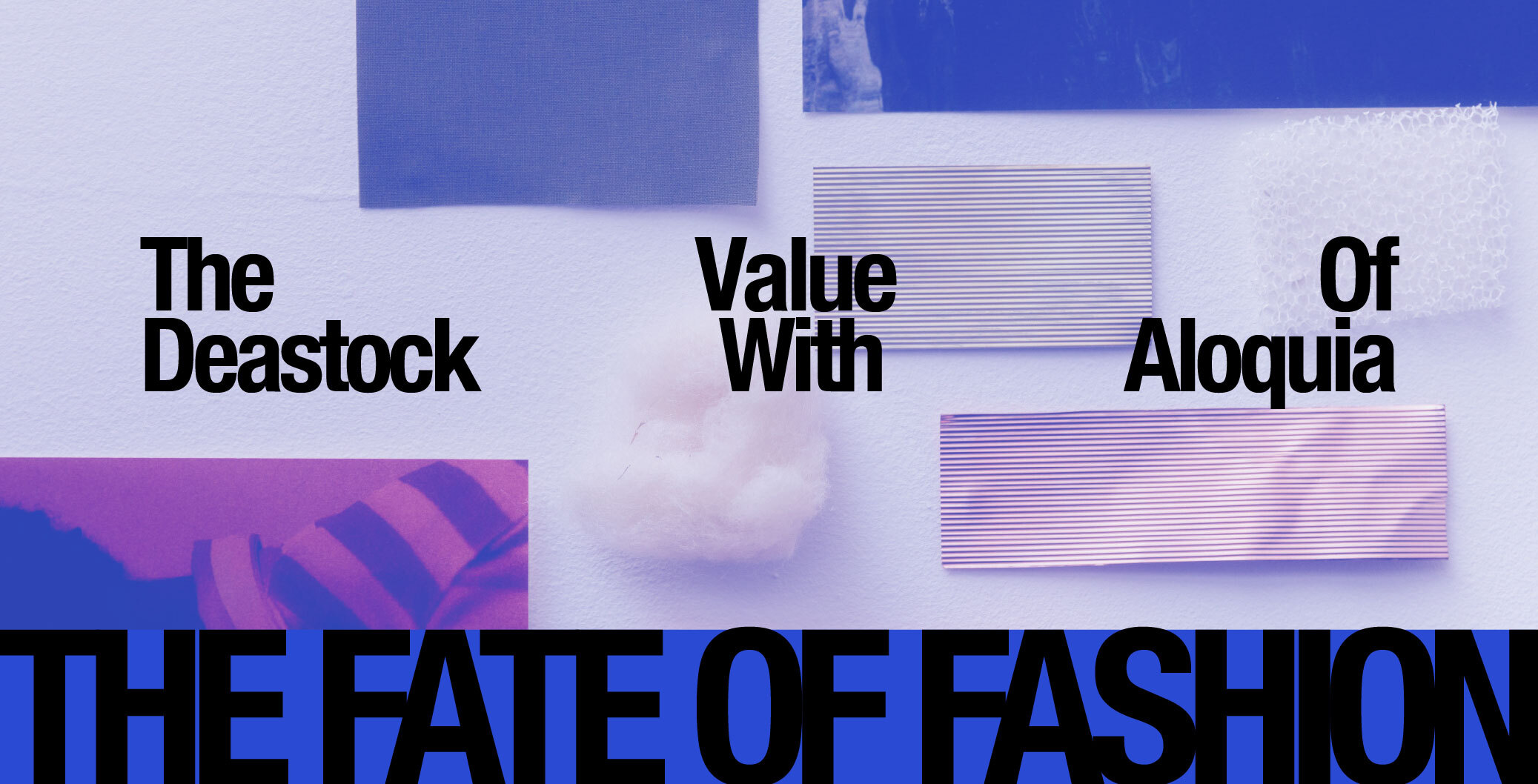
“Deadstock” is extra clothes or materials that were made but never sold or used for their intended purpose. This includes fabric, buttons, zippers, and even finished clothing. Ralph Lauren leveraged the Aloqia platform to manage its deadstock across 7 global locations. They rescued 12.7 metric tons of unused textiles, paper, and plastic packaging.
Why do so many manufacturers and brands end up with excess fabric in the first place?
Every business with a supply chain has excess inventory. It often comes from canceled orders, production changes, or leftover stock from past seasons. Up to 15%+ of production runs end up as excess. This means USD 2 trillion worth of excess just sits in warehouses collecting dust or being burned or sent to landfills every single year.
Business + Sustainability Value
What are the most compelling benefits—financial, environmental, or otherwise—for brands who choose to work with deadstock?
Many brands see deadstock as a way to reduce waste. Instead of throwing it away, they reuse or resell or recycle it. This helps save money and protect the environment. And that’s a win for everyone. Victoria’s Secret started reselling in China, Vietnam, and Sri Lanka and have since expanded. As a result, they accelerated their go to market time, increased margins, and used the data to make better decisions.
Do you see deadstock sourcing as a short-term trend or a long-term pillar of circular fashion?
Forward-thinking brands we work with, like Cotopaxi, have built over 60% of their entire product line from deadstock! For our customers, sourcing deadstock is a smart business decision; it reduces cost, shortens lead times, and lowers environmental impact without compromising on quality. We make the process fast, transparent, and scalable with our software platform and team on the ground in the United States, Europe, Asia, and Africa.
How does deadstock sourcing fit into a broader sustainability strategy for brands trying to reduce their footprint?
By repurposing excess inventory, SHEIN, for example, refined its procurement choices and saved resources, including textile fibres such as polyester, recycled polyester, spandex, nylon, rayon, lyocell, and modal. In 2024 this conserved 202,083 cubic metres of water, 4,447 kg of chemicals, and over 42 metric tons of CO₂e compared to traditional production. Impact was measured by the AI-driven algorithms developed by Aloqia with the support of data scientists at MIT Solve and audited by Deloitte.
Challenges + Misconceptions
What are some of the biggest misconceptions or hesitations brands have about using deadstock?
Just because a designer or brand no longer has a use for the fabric doesn’t mean it's unusable! Buying deadstock helps reduce the amount of wasted fabric by giving it a second life. Deadstock fabrics are often one-of-a-kind and made of high-quality materials that get verified by our software. This allows designers the flexibility to have lower minimum order quantities (MOQs) and to order the amount they need at a more affordable cost while making a design-forward choice. Working with our customers to source deadstock has helped them reach 150M+ new end consumers just by talking about it!
Are there challenges around consistency, quality, or scale when working with surplus materials—and how can they be overcome?
We vet suppliers rigorously, build strong inventory networks, and guide brands toward flexible, limited-run, or modular design strategies. By integrating deadstock into the design process early, brands can embrace agility while staying true to sustainability goals. Like Noel Kinder, Chief Sustainability Officer at Nike, said, “I really was compelled by [Aloqia]…leveraging waste and incorporating that back into the industry…”
Technology + Innovation
How is technology helping to bring transparency and scalability to deadstock sourcing?
Our technology helps to centralize surplus material data across sources and automate discovery and fulfillment workflows for brands. We integrate into SAP and other systems, allowing for quick and easy access to information globally. Algorithmic matchmaking connects sellers and buyers, turning overproduction into opportunity without manual reconciliation. "[Aloqia] is challenging the status quo by driving sustainable change," says Christian Klein, Chief Executive Officer, SAP.
How does Aloqia leverage data or AI to help brands make smarter decisions with surplus inventory or sourcing strategies?
Aloqia applies AI-powered analytics to categorize inventory, assess material attributes, and forecast demand, enabling brands to make data-driven decisions about whether to resell, reuse, or recycle excess stock. These algorithms inform buyers about the value and origin of materials while helping brands optimize sourcing strategies by evaluating cost savings, environmental impact, and potential ROI. With Aloqia’s technology, Anheuser-Busch was able to “optimize our supply chain operations and maximize our inventory efficiency,” says Lakshita Gupta, GM - Logistics Transformation.
Industry Shifts + What’s Next
Are you seeing more mainstream brands adopting deadstock, or is it still primarily small and independent designers leading the way?
Larger, mainstream brands are increasingly integrating deadstock fabrics into their lines, inspired by the mounting consumer demand for sustainability. At Aloqia, everyone from Fortune 500s to mid-tier brands to independent designers can participate, using tech to bridge scale and traceability in surplus sourcing. Thank you to our partners from the U.S. Department of States and European Union to the World Economic Forum and United Nations for recognizing this shift with us and helping us lead the way!
What role do events like Texworld NYC & LA play in moving the conversation forward around sourcing alternatives like deadstock?
Texworld acts as a catalyst, bringing the deadstock supply chain from concept to commerce with its network. Texworld’s dedicated “Deadstock Sourcing” zones and exhibitor filters highlight the category’s maturity and buyer interest. Curated spaces, pitch sessions, and networking hubs drive education and connection and Aloqia is thrilled to be a part of it!
Looking ahead, how do you envision deadstock evolving as part of the sourcing ecosystem in the next 5 years?
Deadstock will mature to a fundamental sourcing channel, seamlessly integrated alongside virgin and recycled materials. Enhanced by digital inventory marketplaces and real‑time analytics, deadstock will plug into just‑in‑time supply chains, reducing waste and cost across industries and around the world.
Final Thoughts
For brands attending sourcing shows or exploring circular solutions, what’s one piece of advice you'd give to get started with deadstock?
Begin by defining clear goals, whether cost‑savings, traceability, or environmental metrics, so you can filter and evaluate materials effectively on the show floor. Tap into technology to assess fabric specs, origin, volumes, and impact data before committing. And don’t try to go it alone–we are here to help!
And finally—what’s your dream vision for a fully circular fashion industry?
We envision a world where all fabric life cycles are digitally tracked, reused, and repurposed. In that future, brands operate on a zero‑waste inventory model, powering sales with traceable, regenerative fabrics sourced through streamlined platforms. It’s an industry where transparency, profitability, and planet-consciousness are inseparable, and deadstock is a cornerstone of that ecosystem.