

May 29, 2026
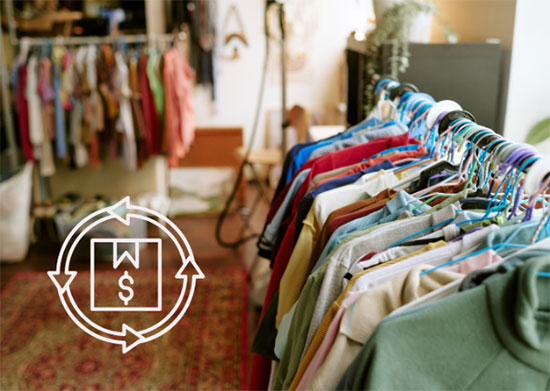
The apparel industry has reached an interesting point: Luxury is falling out of favor as consumers prioritize value and reconsider what really defines it, brands and suppliers are still struggling to find real partnership, and as consumers rethink what they want in their wardrobes, resale is seeing a consistent rise.
As such, more companies are paying closer attention to circularity and what it will really take to achieve it. And now, more companies — including H&M, Primark, Vinted and Zalando, among others — are pushing for policy reform that are keeping back progress on circular business models.
The Fashion ReModel Business Statement, led by the Ellen MacArthur Foundation and released May 20, said, “We are fashion and textile businesses calling for policies that help circular business models scale. Circular business models such as resale and repair don’t just offer a clear path to resource efficiency and job creation; they are a multi-billion dollar economic opportunity.”
The collective of industry players calling for the change, which also includes Vestiaire Collective, Fashion for Good and the American Apparel & Footwear Association, is calling for three key things. For one, they want reduced VAT across the EU and eliminated sales tax in Canada and the US on resold products and repair services. They also want reduced labor taxes and an incentive package that includes labor tax credits for jobs involved in resale and repair operations. The third thing the ReModel statement calls for is using Extended Producer Responsibility (EPR) to help create separate collection and sorting infrastructure at scale.
Fashion for Good has also been pushing via a separate Project Feedstock Activation (FAE) Europe, an effort to channel post-consumer textiles as feedstock for textile-to-textile recycling at scale.
A growing push toward resale, textile recycling and regulation-backed circularity could significantly reshape demand patterns across the textile industry—making it an area manufacturers should be watching closely. As governments increasingly explore extended producer responsibility laws, mandatory textile collection schemes and stricter waste regulations, brands may face greater pressure to design products with reuse and recyclability in mind. That could accelerate demand for materials that are easier to sort, recycle and trace, while creating new opportunities for suppliers specializing in recycled fibers, mono-material fabrics and circular production systems.

Texworld’s Innovation Hub Returns
Looking for something new? Texworld NYC Innovation Hub will be back at this summer’s shows. This curated destination on the heart of the show floor is where visionary exhibitors showcase cutting-edge ideas, transformative technologies and the kinds of sourcing solutions that help companies advance their responsibility, sustainability and supply chain leadership. The Innovation Hub will feature a Next-Gen Materials section complete with eco-forward developments reshaping how fabrics are sourcing and used; a Technology Lab to showcase platforms and smart systems driving efficiency across the supply chain; and the Solutions Studio, where buyers can get guidance on certification, compliance and circularity, from service providers leading in responsibility and transparency.
“The Innovation Hub is really about creating a space for discovery,” said Walker Sims, Marketing Manager of Fashion & Apparel Shows for Messe Frankfurt Inc. “As the industry continues to evolve, we wanted to bring together the ideas, materials, technologies, and people that are pushing fashion and textiles forward in a meaningful way. It’s a place to explore what’s next, spark conversations, and connect innovation back to the human side of the industry.”
Stay tuned for the full list of exhibitors participating in the Innovation Hub coming soon!

What We’re Reading
How Bangladesh’s Garment Suppliers are Being ‘Squeezed Dry’
For decades, Bangladesh has been one of fashion’s most important manufacturing hubs. But according to a new study, even as nominal garment prices have slightly increased, brands are actually paying far less in real terms than they were 25 years ago, a recent Sourcing Journal article reported. After adjusting for European inflation, the price paid for a basic cotton T-shirt has fallen by roughly 30 percent—intensifying pressure on suppliers already navigating rising wages, energy costs and global economic uncertainty. The findings underscore a growing imbalance in the fashion supply chain, where brands continue to push for lower costs while manufacturers say they’re being “squeezed dry.”
How Luxury Lost 50 Million Customers
Luxury’s slowdown is no longer just about weak demand — it’s raising bigger questions about what luxury actually means today. Speaking at the FT’s Business of Luxury Summit this week, industry leaders examined how aggressive price hikes, concerns over declining quality and widening economic inequality may have pushed as many as 50 million consumers out of the market. According to a Business of Fashion article, as brands try to reignite growth after years of post-pandemic momentum, the conversation is shifting from exclusivity alone to whether customers still believe luxury is worth the price.
Shein, Everlane and the Power of Owning Your Supply Chain
Shein’s reported acquisition of Everlane may look, at first glance, like fashion’s strangest pairing yet: ultra-fast fashion meets radical transparency. But beyond the internet discourse about sustainability optics lies a deeper story about where fashion value is shifting. Industry experts say in a recent Vogue Business article, the potential deal is less about dismantling Everlane’s identity and more about combining two business models that each represent a different side of fashion’s future: consumer demand for more responsible products and the operational efficiency needed to actually scale them. For years, sustainability has largely lived in marketing language and capsule collections. The bigger question now is whether true progress depends less on branding sustainability — and more on building it directly into the supply chain itself.
Register now for Texworld NYC / Apparel Sourcing NYC or Texworld LA / Apparel Sourcing LA and discover global sourcing, trend insights, educational sessions, new supplier connections, and more — all in one place this summer. Whether you join us on the East Coast, West Coast, or both, your next partnership starts here!
Call for Sustainable Bag Manufacturer for Texpertise!
Texpertise is the global textile business network by Messe Frankfurt, uniting more than 60 textile trade fairs in 13 countries and connecting industry players along the entire value chain.
The Texpertise Network is currently looking for an exhibitor producing high-quality, sustainable branded Texpertise bags to be used as across Texpertise fairs worldwide.
The bags should represent premium quality and a clear commitment to sustainable materials and responsible production. In return, the selected company will benefit from logo placement on the bags, gaining international visibility at multiple Texpertise events and reaching a broad audience of industry professionals and potential new clients.
If you are interested in this partnership opportunity, please contact info.texpertise@messefrankfurt.com.