

March 17, 2026
Spring is in the air and we’re looking forward to emerging from a long winter marked by extreme weather and extreme geopolitical volatility for the global apparel industry.
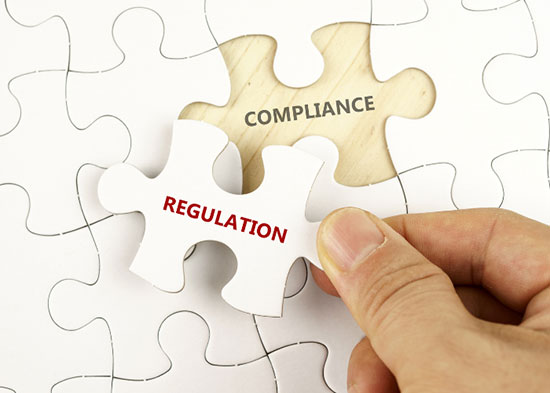
In the midst of all things on apparel makers’ minds, compliance and regulatory pressures are mounting, and it has been challenging for many to keep track of all that is — and may soon be — required of them.
A recent Vogue Business article, “Is Sustainability a Supply Chain Bottleneck?” dives into it all. Yes, the industry may have been asking for regulation to support sustainability over the last decade. Still, the fact that much of that regulation came at once is what has proven challenging.
In Europe, companies are most focused on the Ecodesign for Sustainable Products Regulation (ESPR) and the digital product passport (DPP) that’s part of it. There is also the Corporate Sustainability Reporting Directive (CSRD), the Corporate Sustainability Due Diligence Directive (CSDDD), and the Empowering Consumers for the Green Transition Directive (EGCTD). In the U.S., the primary focus is on California’s Responsible Textile Recovery Act (SB-707), the Climate Corporate Data Accountability Act (SB253), and the Garment Worker Protection Act (SB62).
It’s a lot for most companies to focus on, and compliance requirements are coming quickly. In July, an ESPR measure will ban big companies from destroying unsold clothing. But the biggest challenge may be for manufacturers, who are not only dealing with the onslaught of regulations but also the variations between what brands are asking of them.
“If you’re a supplier, you have 20 clients, and they’re not aligned enough in what they ask and how they ask it, and what format you should deliver it in. That just multiplies the work you have to do,” Matthijs Crietee, secretary general of the International Apparel Federation (IAF), told Vogue Business. “This is really an industry challenge.”
The challenge is one the industry will have to navigate, and brands and manufacturers will have to really partner to make any of it possible.

Texworld NYC’s 20th Anniversary Celebration
In other news, it’s Texworld NYC’s 20th birthday! Born in 2006 as a way to bring together professionals from across the globe — from apparel fabric buyers to product developers, designers, and merchandisers to manufacturers — Texworld NYC is now one of the largest sourcing events on the East Coast, attracting thousands of new and returning buyers each year.
“Over the past 20 years, Texworld NYC has become an important meeting point for the global textile supply chain and the North American apparel market,” said Jennifer Bacon, Vice President of Fashion and Apparel Shows. “Being in New York, one of the world’s fashion capitals, has allowed the show to connect international manufacturers with designers, brands, and sourcing professionals who are shaping the future of the industry.”
Beyond sourcing, Texworld has grown into a platform for ideas and industry dialogue. Through initiatives like Textile Talks, trend showcases, and sustainability-focused programming, the show has helped bring new materials, new technologies, and new perspectives to the U.S. market.
“Looking ahead, Texworld will continue to evolve alongside the industry. With the expansion of Texworld Los Angeles, we are also strengthening our connection to the West Coast apparel community. Together, these events create opportunities for the global textile industry to engage with the full breadth of the U.S. fashion market,” Bacon said. “After two decades, our mission remains the same: bringing the global textile community together and helping move the industry forward.”

Printsource Returns
Printsource, the premier hub for surface and textile design, will be back at Texworld NYC for the Summer 2026 edition, July 20 - 31. This will mark three years in a row that Printsource has been able to host the world’s top creative talent, and the value added by being co-located with Texworld NYC is undeniable. Printsource showcases hundreds of collections by surface and textile design studios and agents around the world — including England, France, Italy, Spain, Australia, and the U.S., to name a few — in categories spanning apparel, bed & bath, kitchen & tabletop, paper goods & stationery, wall coverings, and window fashions.

What We’re Reading
Less Law, Same Risk: What Final Omnibus Approval Means for EU Due Diligence
The European Union has officially approved Omnibus I, a move that significantly scales back the bloc’s once-ambitious sustainability reporting and supply chain due diligence rules. According to a recent Sourcing Journal article, the revised framework sharply reduces which companies must comply: the Corporate Sustainability Due Diligence Directive (CSDDD) will now apply only to companies with more than 5,000 employees and €1.5 billion in global turnover, while the Corporate Sustainability Reporting Directive (CSRD) will cover firms with at least 1,000 employees and €450 million in revenue. That shift cuts the number of companies required to report by roughly 70 percent, leaving many businesses in high-risk sectors like textiles outside of the scope.
China’s New Playbook for Buying Western Fashion Brands
Chinese investors are rewriting their approach to Western fashion acquisitions, according to a recent article in Business of Fashion. After earlier deals that chased rapid global expansion—and often stumbled in the process — Chinese capital is returning to the market with a more cautious playbook. The new strategy favors steadier growth, tighter operational control, and more realistic expectations for scaling US and European fashion brands. The big question now: whether this more measured approach will succeed where earlier waves of investment struggled.
What Does US Apparel Import Data in 2025 Reveal About the Cost of Sourcing?
What does the latest U.S. apparel import data say about the cost of sourcing in 2025? According to an article in Just-Style, the numbers point to four clear patterns shaping how brands are sourcing this year — from shifting country dynamics to ongoing cost pressures that continue to reshape where and how apparel is made.