

February 10, 2026
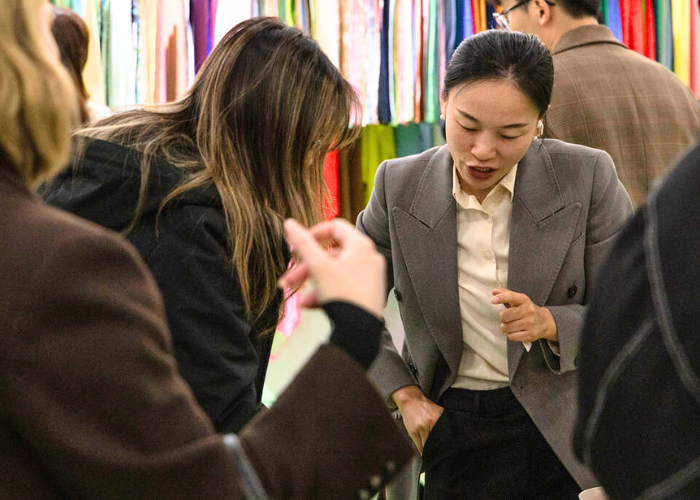
New York City might have been battling frigid temps during the recent Texworld and Apparel Sourcing NYC Winter edition that wrapped last month, but things were hot inside as thousands converged to discover all that’s new and now in textile and apparel sourcing.
With exhibitors from more than 18 countries participating, attendees benefited from global breadth as well as an expanse of product categories. Five featured country pavilions—Bangladesh, Taiwan, Korea, Mexico and Uzbekistan—meant options for sourcing exploration and expansion at a time when more and more brands and retailers shift things for smarter supply chains in the face of tariffs.
It’s time to rethink how things are done on many fronts, and this edition’s newly expanded Innovation Hub provided options for new technology solutions, next-generation materials and expanded industry services. All in one dedicated feature, AI, it made exploration easy for attendees.
“This was my first time exhibiting at Texworld NYC as an Innovator, and it was truly an amazing experience,” April Knit Studio, an Innovation Hub exhibitor said. “I met so many new entrepreneurs who are just starting their brands and are strong potential clients for my business. Texworld NYC is a great platform to connect, build relationships, and grow internationally.”
AI is just about everywhere now and that was also the case at Texworld and Apparel Sourcing, where educational programming and conversations on the show floor examined what technology will mean for apparel and textiles.
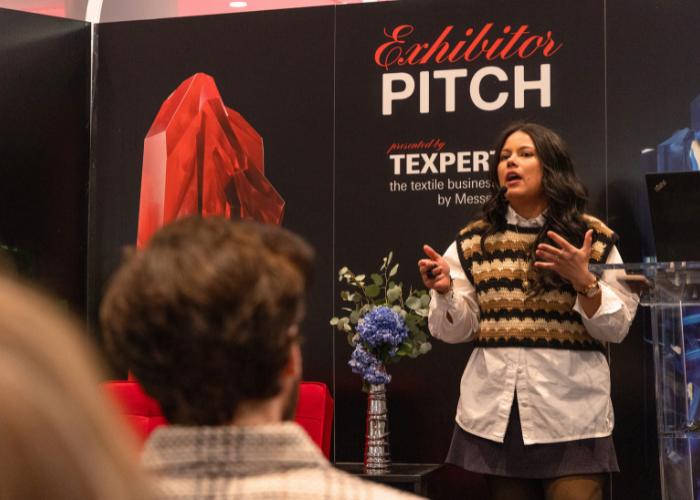
“Texworld New York City clearly demonstrated how strongly artificial intelligence is shaping the future of the textile industry,” Olaf Schmidt, vice president of textiles and textile technologies at Messe Frankfurt GmbH. “We were very encouraged to see how present and tangible the topic of AI was across so many different formats on the show floor from sourcing to knowledge exchange. This strong interest confirms that the industry is ready to actively engage with AI-driven solutions. With this momentum, we are proud to roll out Texpertise Focus AI as a global programme focus throughout our more than 60 textile shows in 13 countries worldwide to foster orientation on AI in the industry.”
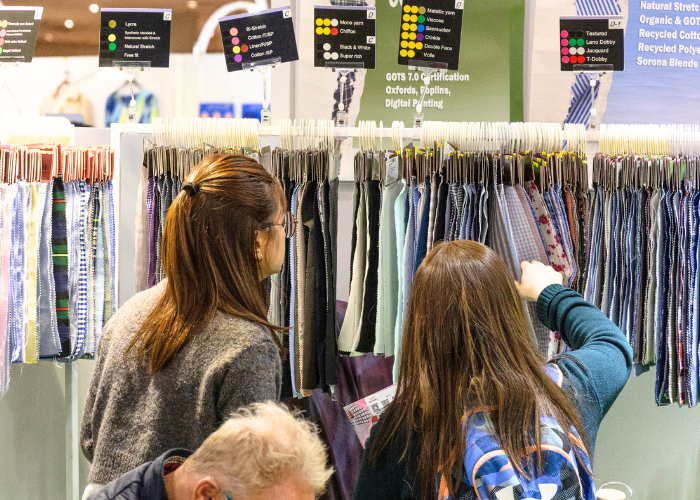
Beyond that, when the weather warms up, we’ll be gearing up for the Summer 2026 editions of the show. Texworld and Apparel Sourcing Los Angeles take place July 21-23 at the California Market Center, and the New York City show follows close on the heels, happening July 29-31 at the Javits Center.
We look forward to seeing you then!

What We’re Reading
Tariffs have been a thorn in the side of apparel and textile players, and it seems the pain may be here to stay. We’re reading all about it this week, plus bright spots in new trade deals and what the recent haute couture week means for luxury.
Tariffs Are Back and So Is the Apparel Price Panic
A new report from the Gold Institute for International Strategy warns that the next cost-of-living shock could show up in clothing prices if apparel supply chains don’t adapt quickly to new tariffs. According to a recent Sourcing Journal article, the group argues that tariffs should be
treated as a structural shift—calling for a “many-nodes, one-standard” sourcing model across countries like Bangladesh, Kenya and Peru to reduce reliance on any single manufacturing hub.
US-El Salvador Reciprocal Trade Agreement to Boost Textile Exports
The U.S. and El Salvador reached a framework for reciprocal trade last November, reinforcing El Salvador’s role in the CAFTA-DR region—an integrated manufacturing network closely tied to the U.S. textile supply chain. As Just Style reported recently, NCTO CEO Kim Glas, the partnership drove $11.3 billion in two-way trade in 2024 and supported more than 470,000 U.S. textile jobs.
The Couture Season That Cut Through
Following a landmark couture week, Tim Blanks and Imran Amed dissect the high-profile debuts at Dior and Chanel—and what they reveal about luxury’s next chapter, in recent Business of Fashion coverage. From Jonathan Anderson’s craft-driven reset at Dior to Matthieu Blazy’s body-first approach at Chanel, the season showed how couture is being reimagined as both creative laboratory and commercial signal